













Importing Korean cosmetics is an activity of interest to many distributors, retailers, and e-commerce businesses looking to expand their K-Beauty portfolio in international markets. Let’s take a look at this article with Coslife to better understand the documents, procedures, and process for importing Korean cosmetics, from Product Notification, CFS, LOA, and INCI to how to choose suitable B2B product sources.
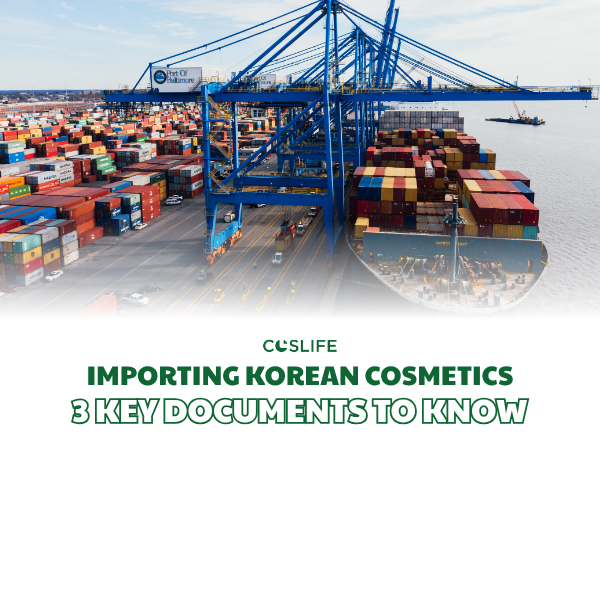
What do you need to prepare when importing Korean cosmetics?
Before importing Korean cosmetics, businesses need to clearly identify the market where the products will be distributed and the requirements applicable in that market. This is an important step because there is no single set of import procedures for cosmetics that applies worldwide.
Even within the ASEAN region, requirements are developed under the ASEAN Cosmetic Directive framework, but national regulatory authorities still manage, notify, and conduct post-market surveillance according to the regulations applicable in each country. ASEAN also provides for the Product Notification system, Product Information File, and requirements related to cosmetic ingredients, labeling, and safety.

Businesses should check Korean cosmetics import procedures and document requirements in the target market before placing an order
Korean cosmetics import procedures and required documents
Korean cosmetics import procedures should be considered from the sourcing stage. Businesses should first determine whether the product falls within the scope of cosmetics, then check the requirements for ingredients, labeling, notification or registration, and technical documentation applicable in the intended distribution market.
Within the ASEAN system, Product Notification is an important part of the cosmetic regulatory framework. ASEAN guidance requires businesses to submit a notification to the cosmetic regulatory authority of the country where the product is placed on the market; at the same time, the technical and safety information in the Product Information File must be available for regulatory inspection when required.
Therefore, when preparing documents for importing Korean cosmetics, businesses need to distinguish between transaction documents and product regulatory documentation. Invoice, Packing List, and shipping documents serve transaction and logistics purposes; while Product Notification, PIF, or other product documents serve cosmetic regulatory requirements depending on the market.
A cosmetic CFS is a Certificate of Free Sale, commonly used as a document demonstrating the product’s free-sale status in the issuing jurisdiction. However, a CFS should not be understood as a marketing authorization that is automatically valid in every country. Businesses need to check the issuing authority, contents, and acceptance requirements of the destination market before using this document in their application.
A cosmetic LOA is a Letter of Authorization, commonly used to demonstrate that one party legally authorizes another party to carry out a specific activity. The contents of the LOA should be appropriate for its intended purpose, product name, brand, and relevant parties. Businesses should determine in advance what purpose the LOA is required for rather than simply requesting a generic LOA template.

The types of documents required for importing Korean cosmetics may vary depending on the market and product
Korean cosmetics notification, CFS, LOA, and INCI
During the process of importing Korean cosmetics, businesses will also commonly encounter the terms Product Notification, CFS, LOA, and INCI. These are different concepts and should not be used interchangeably.
Product Notification is the procedure for notifying a product to the regulatory authority under the mechanism applied in the relevant market. In ASEAN documents, the Notification form requires information such as the brand, product name, product type, intended use, and manufacturer information. Therefore, when referring to Korean cosmetics notification, businesses need to accurately identify the legal mechanism of the country where the product will be marketed, rather than assuming that all markets use the same registration or notification process.
INCI is a naming system developed to identify cosmetic ingredients and provide standardized terminology for ingredient declarations on labels. Official INCI sources also note that the existence of an INCI name for an ingredient does not mean that the ingredient has been “approved” or automatically complies with the regulations of every country.
Therefore, when checking INCI for a Korean cosmetic product, businesses should compare the ingredient list with the requirements of the target market. If the formula or packaging changes, businesses should also check whether such changes affect the product notification or product documentation. ASEAN also requires businesses to consider whether changes to the formula, packaging, or claims require a new notification or an amendment to an existing notification.
A common mistake is to check only the price and MOQ without confirming the documentation. Once the goods have been ordered or shipped, if the product information does not meet the requirements of the target market, businesses may need to reprocess the documentation or adjust their business plans. Therefore, checking documentation before placing an order is an important step when sourcing Korean cosmetics wholesale.

Check Korean cosmetics notification, INCI, cosmetic CFS, and LOA before introducing products to the market
Importing Korean cosmetics from Coslife’s B2B sources
The process of importing Korean cosmetics can begin with identifying the market, product categories, and brands that the business wants to distribute. The business then selects suppliers, checks the product portfolio, MOQ, wholesale prices, and documentation information. Once the commercial terms are agreed upon, both parties proceed with the order and prepare transaction and shipping documents according to the agreement.
For businesses looking to build a K-Beauty portfolio from multiple brands, working with a B2B distributor can help simplify the sourcing process. Instead of searching for each brand individually, businesses can access a multi-brand portfolio and select products that fit their business model.
Coslife is a distributor and wholesale supplier of Korean cosmetics, focusing on B2B operations with a portfolio of more than 50 brands and over 1,000 SKUs. Coslife supplies products to partners such as distributors, retailers, beauty stores, and e-commerce businesses in international markets.
Coslife does not provide import customs clearance services or cosmetic notification services on behalf of partners. Coslife’s role focuses on product sourcing and distribution activities: introducing products, discussing product portfolios, MOQ, wholesale prices, supply availability, and commercial terms. For each brand and product, Coslife can provide available product information or documentation so that partners can independently check the import requirements in their respective markets.
This approach is particularly suitable for businesses looking for Korean cosmetics wholesale sources to build wholesale or retail product portfolios. Partners can select products according to market demand and then independently carry out the legal requirements, import procedures, and distribution activities in accordance with the regulations of their respective countries.
For global B2B operations, clearly defining the responsibilities of the distributor, buyer, and relevant parties helps make the cooperation process more transparent. Coslife focuses on supplying products and providing necessary commercial information within the scope of product sourcing, while the importing business is responsible for checking and complying with the regulations applicable in the destination market.
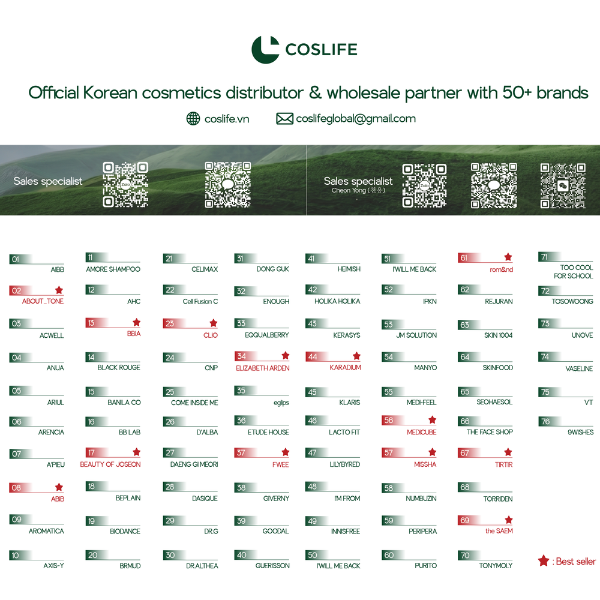
Coslife provides Korean cosmetics wholesale sources for distributors, retailers, and international B2B partners
We hope this article has helped businesses better understand importing Korean cosmetics, from checking documentation, Product Notification, CFS, LOA, and INCI to choosing suitable B2B product sources. Visit coslife.vn or contact coslifeglobal@gmail.com to explore the Korean cosmetics portfolio and discuss B2B cooperation opportunities with Coslife.